
College of Humanities and Law Holds Working Meeting on the “15th Five-Year Plan” Development Framework
On October 29, the College of Humanities and Law convened a working session to advance the formulation of its “15th Five-Year Plan,” and further deploy related tasks to drive the College’s high-quality development. The meeting was chaired by Liang Yongtu, a member of the University Party Committee Standing Committee, Vice President, and concurrently Dean of the College of Humanities and Law. Members of the College’s leadership team and heads of departments and research bases attended this session.
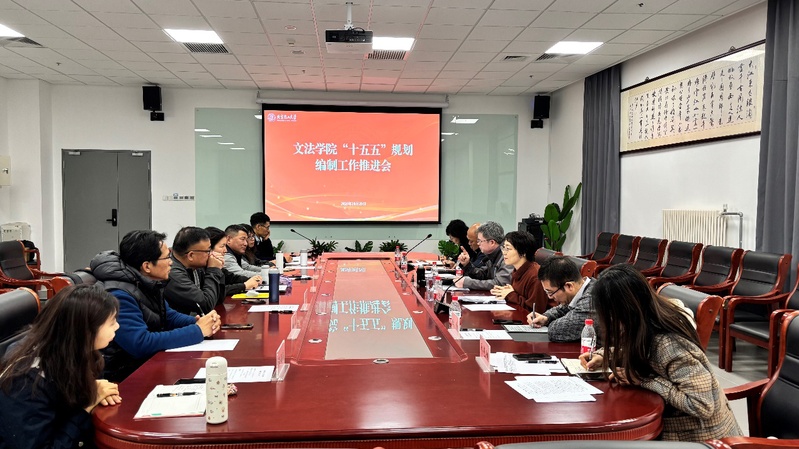
At the meeting, Party Secretary Zheng Xiuying conveyed the key directives from the university’s planning promotion meeting. She further emphasized the working mechanism, standards, and timeline for drafting the “15th Five-Year Plan.” Heads of departments and research bases reported on basic development, achievement under the “14th Five-Year Plan,” and strategic visions for the “15th Five-Year Plan.” Building on an assessment of existing strengths and challenges, they proposed the prospects for future development in areas such as disciplinary advancement, talent cultivation, and faculty team building.
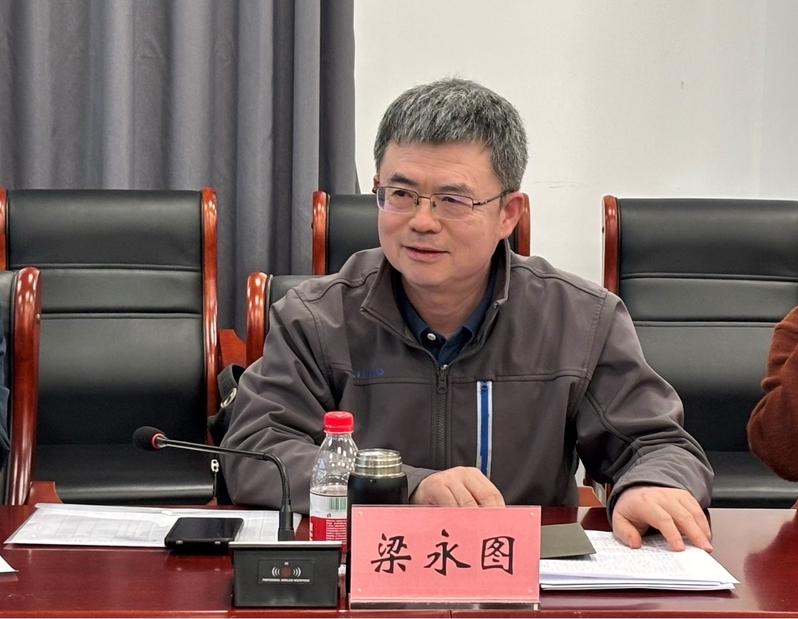
Dean Liang fully recognized the achievements made by each department and research base during the “14th Five-Year Plan” period and their contributing efforts in the ongoing drafting process. He stressed that the “15th Five-Year Plan” period is a pivotal stage for sustaining the university’s high-quality development and a crucial opportunity for the College’s leapfrog growth. He called for three priorities:
1. Raise our sights to grasp the broader trend. In the face of new challenges in higher education, the College must think from a broader perspective, deepen its understanding of high-quality development, and clarify future goals and directions.
2 Position accurately and benchmark effectively. Departments and bases should adopt goal-oriented planning, benchmark at multiple dimensions and higher levels, and establish robust evaluation systems and construction standards.
3 Focus on distinctive strengths for practical results. The College should ground measures in both the College’s characteristics and the external environment. Efforts should be made to strengthen faculty and platform development, optimize incentive and support mechanisms, and improve resource allocation efficiency for the effective implementation of the “15th Five-Year Plan”.
This meeting laid a solid foundation for the formulation of the College’s “15th Five-Year Plan”. Seizing this opportunity, the College will continue to build consensus, deepen reform, enhance overall competitiveness, and advance its development to a new level.
