
Student Growth Workshop | Session 6: “Connecting the World; Appreciating Diversity” Concludes Successfully
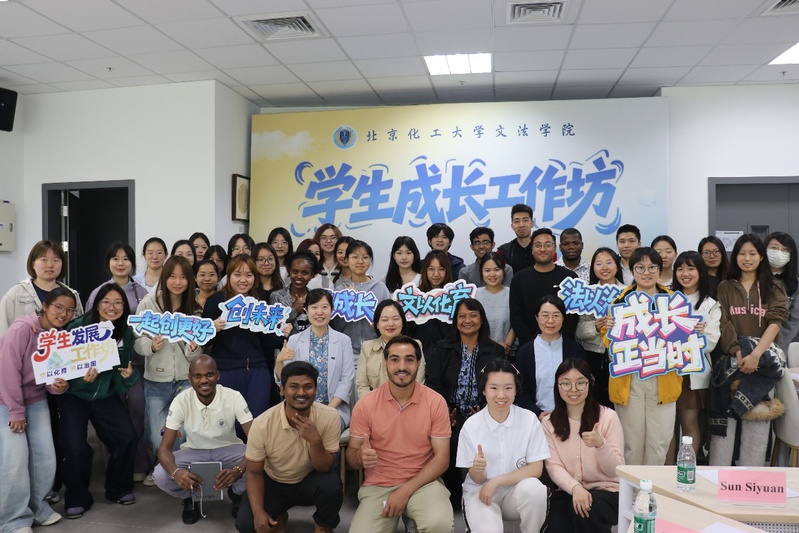
On the morning of April 30, 2026, the 6th Session of the Student Growth Workshop, themed “Multicultural Practice: Applying the 3H (Head, Heart, Hands) Model in Daily Life,” was successfully held in Room 234 of the North Campus Student Activity Center. Attendees included Xu Jun, Vice Dean of the College of Humanities and Law; Zhou Xueying, Chair of the Foreign Languages Department; Sheng Haiyan, a faculty member of the Foreign Languages Department; Hao Yang, a member of the administrative staff at the College of Humanities and Law; and Jiang Xin, Deputy Director of the International Student Affairs Office at the School of International Education. Approximately 50 Chinese and international students from various majors participated in this workshop. Zhou Xueying, initiator of the event, delivered a welcome address, and Vice Dean Xu Jun gave the opening speech.
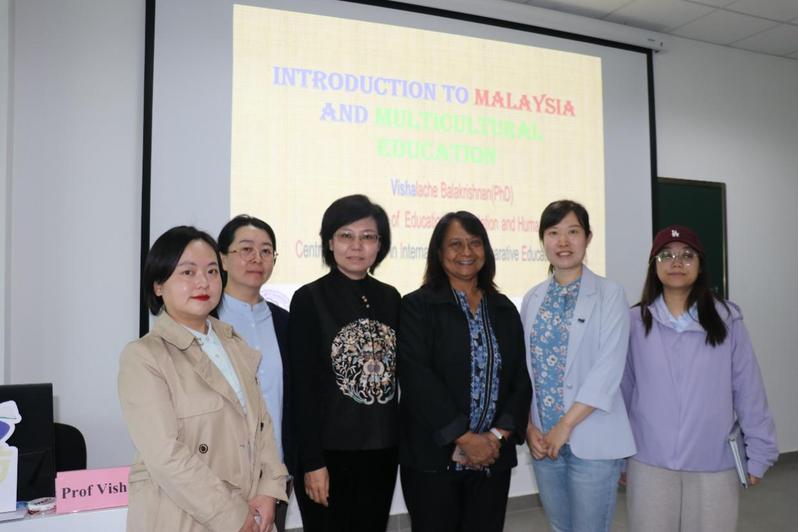
In her opening speech, Vice Dean Xu Jun extended the warmest welcome and most sincere gratitude to Professor Vishalache on behalf of the College of Humanities and Law. She introduced that Professor Vishalache is the Director of the Centre for Research in International and Comparative Education at the Faculty of Education, University of Malaya — Malaysia’s oldest and top-ranked university, ranking 58th globally in the QS 2026 World University Rankings. Professor Vishalache specializes in service learning, multicultural education, and comparative education, and is a prominent scholar in these key academic fields. Vice Dean Xu noted that BUCT is a key national university with distinctive advantages in science and engineering, while developing humanities, social sciences, and foreign language education, and that it maintains extensive international cooperation. The College of Humanities and Law adheres to interdisciplinary education and places great emphasis on cross-cultural literacy and global competence. She stressed that this workshop abandons the traditional one-way lecture model and is an interactive, experiential session, encouraging all participants to devote themselves fully, stay focused, speak English bravely, and interact freely, so as to broaden their global vision, improve cross-cultural literacy, and enhance English communication skills.
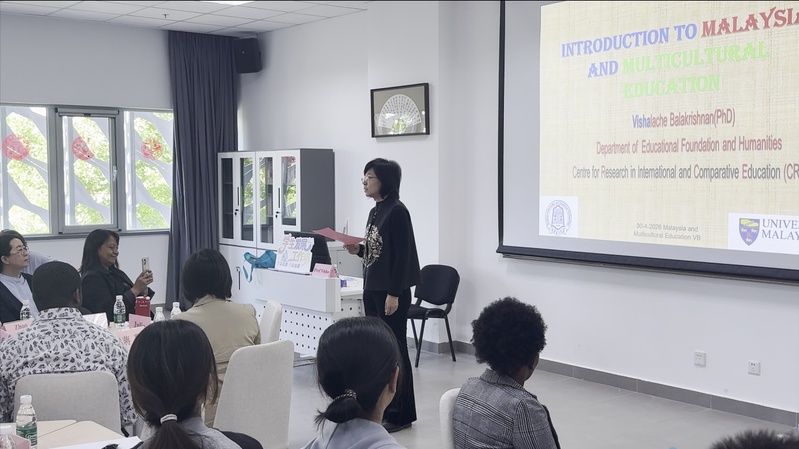
01 Ice-breaking Interaction | The Pen-Rotation Experiment
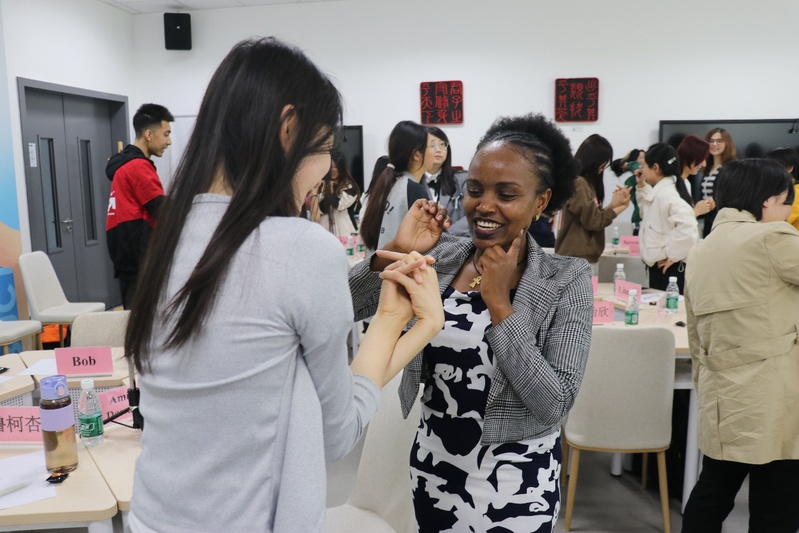
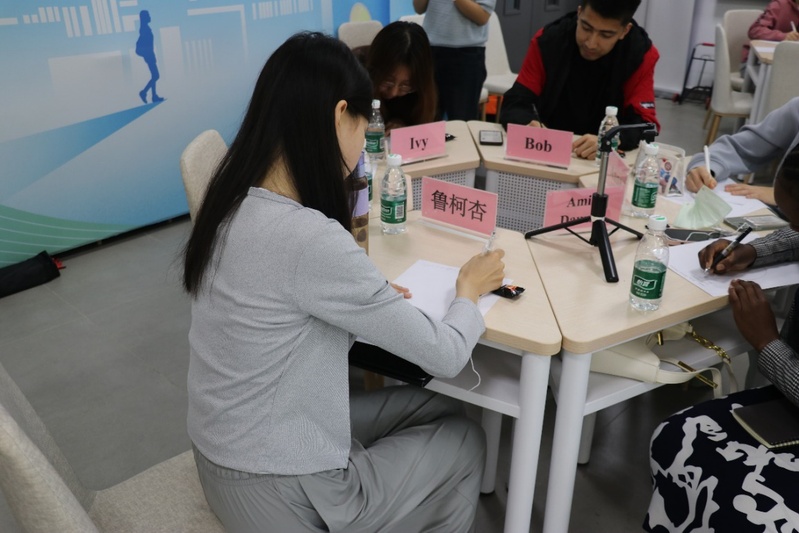
Professor Vishalache began the workshop with an engaging interactive experiment. Using paper, pens, and strings, she guided participants to observe how their thoughts, emotions, and focus can influence physical actions. This experiential activity set the tone for the entire workshop, helping participants sense the subtle connection between inner states and intercultural communication.
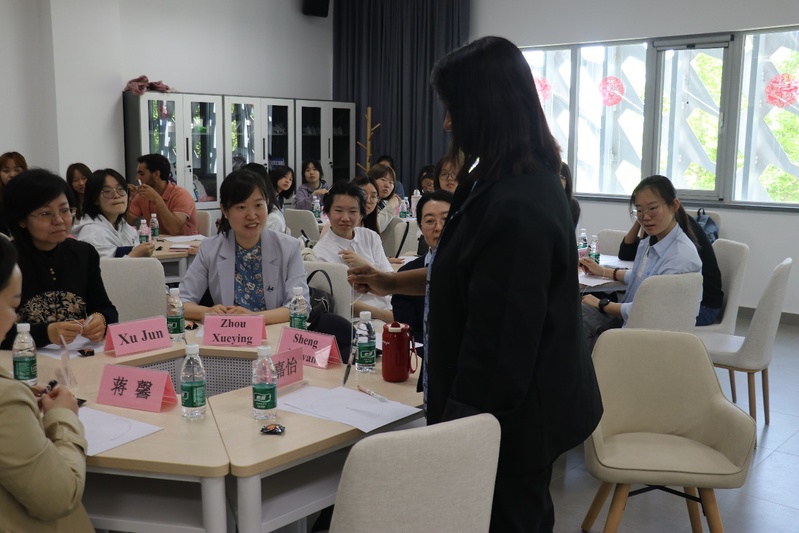
02 Head | Seeing Differences and Commonalities Through a Multicultural Lens
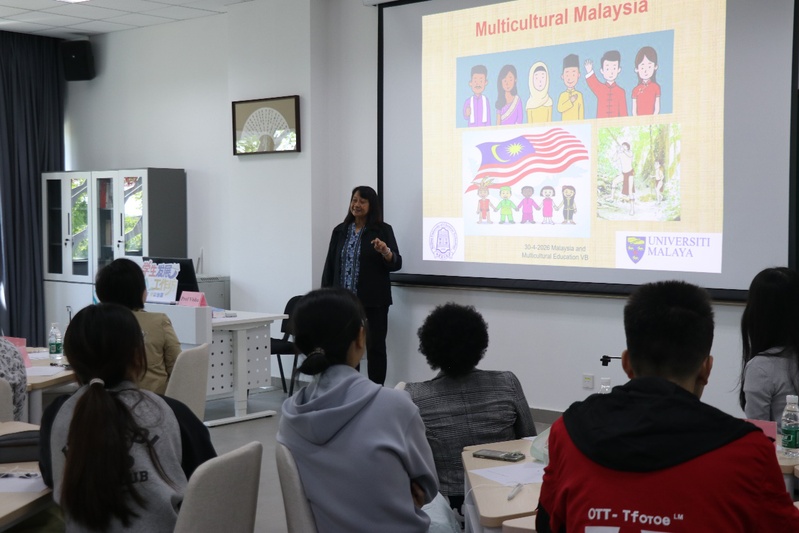
Professor Vishalache used Malaysia as a case study to present a vision of a diverse and coexisting society. Malaysia consists of Peninsular Malaysia and the East Malaysian states of Sabah and Sarawak, and is home to Malays, Chinese, Indians, and indigenous peoples. Through photos and real-life examples, she showed vivid scenes of different cultures standing side by side, festivals of various ethnic groups complementing each other, and street food cultures blending into a harmonious whole.
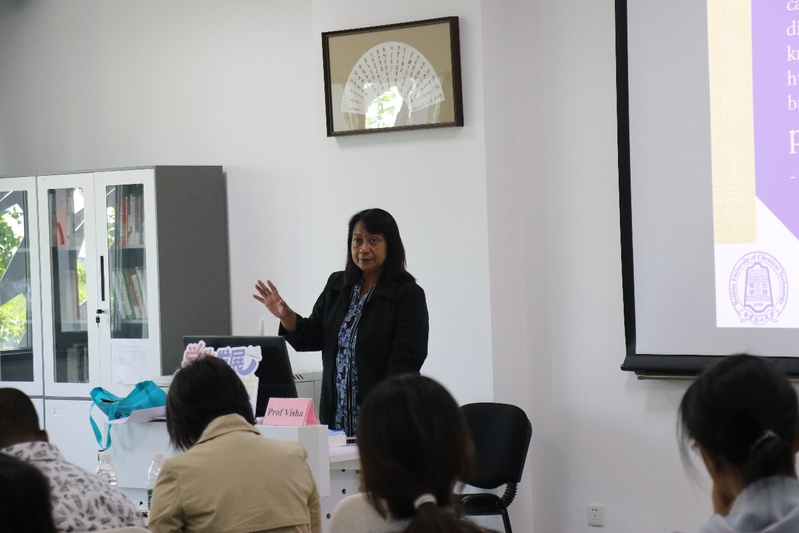
03 Heart | Embracing Differences with Empathy
The next session focused on inclusiveness and empathy as the core of intercultural communication. Professor Vishalache explained that beliefs, values, and attitudes shape our cultural responses. By understanding the preservation of Chinese traditions and the lifestyle of indigenous peoples, participants learned to approach differences with empathy rather than judgment. She emphasized that education is not only for career preparation but also for leading a dignified, meaningful life and becoming citizens who contribute to the common good.
04 Hands | Putting Intercultural Competence into Action
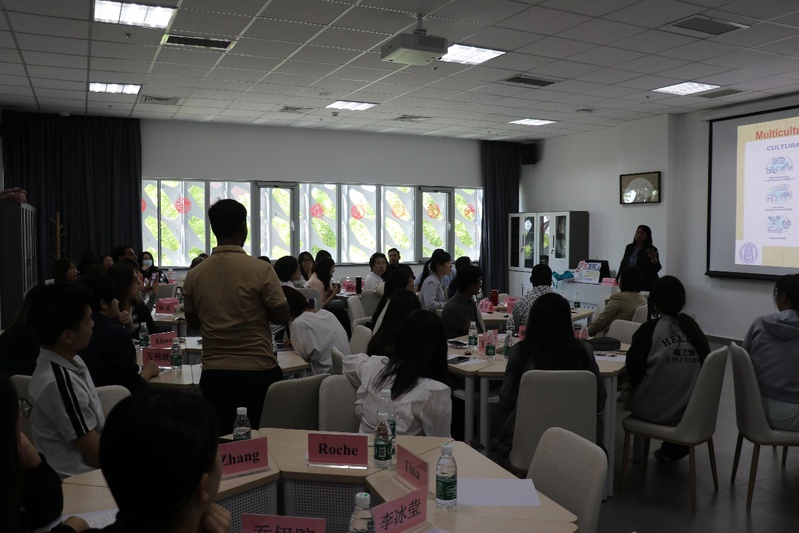
Professor Vishalache introduced the Venn diagram of three core capabilities (knowledge, skills, attitudes) and five soft skills (communication, teamwork, adaptability, problem-solving, creativity). She noted that intercultural communication involves not just casual conversation but also public speaking, confident expression, negotiation, conflict resolution, and responding to aggressive behaviors. The six-stage change model based on Kübler-Ross theory helped participants understand the non-linear process of intercultural adaptation — from fear and denial to anger, acceptance, exploration, meaning-making, and ultimately self-integration and renewal.
05 Conclusion | Becoming a “Glocal” Individual
Professor Vishalache returned to the essence of education and learning. She encouraged students to transform understanding and empathy into daily actions. She introduced the concept of “glocal” — rooted in local culture while embracing a global vision — and wished that every participant, like the Māori Koru symbolizing new life, growth, and connection, would keep unfolding and growing in a diverse world, becoming more resilient and more inclusive.
Participants’ Feedback:
This workshop was absolutely impressive and unforgettable for me. I loved how Professor Vishalache emphasized that this was more of a workshop than a lecture—her interactive, engaging style made every moment feel meaningful, and I truly don’t think I’ll ever forget what I learned today. I’m so grateful that she came all the way to China to share her insights with us. The most valuable takeaway was Professor Vishalache’s reminder that “the most valuable thing about learning is that once you’ve learned something, no one can take it away from you”. This lesson perfectly summed up what I gained from the workshop: not just knowledge about multiculturalism and the 3H model, but also practical, lifelong tools for understanding multicultural contexts that will stay with me forever.
——Ling Chen, China
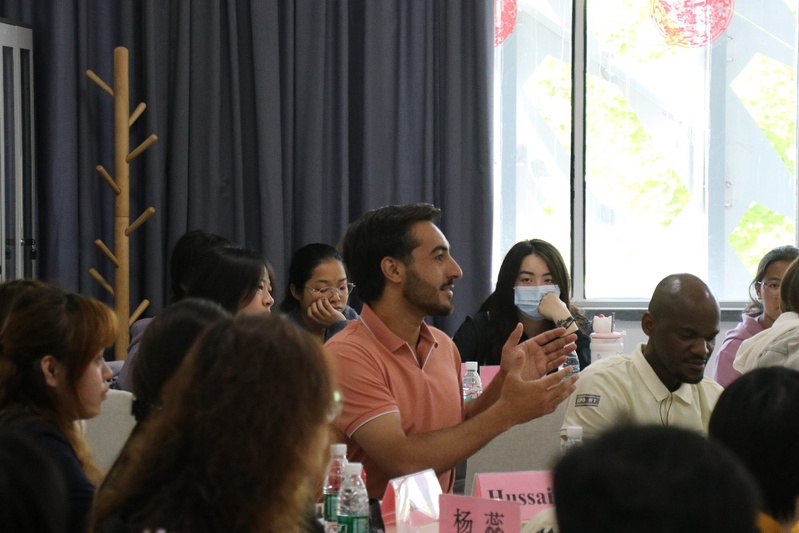
I felt that the event was both engaging and insightful. It created a comfortable environment to reflect on multicultural perspectives and better understand the importance of becoming a “glocal” student. I especially appreciated the interactive element which made the session more meaningful rather than just theoretical. Overall, it was a valuable and thought-provoking experience. The most valuable takeaway for me was the importance of having a “glocal” mindset.
——Hussain Ahmad, Pakistan
This activity has been of great benefit to me. I’m very glad to have attended this workshop. The professor explained to us how to resolve conflicts between different cultures. The key lies in considering things from others’ perspective. I was deeply touched.
——Yang Shuai, China
From today’s training of mindset:
① Surely I can say I got a great takeaway. It helps me know how to accept others' culture and how to interact with it, because now I am an international student and I am living in a very diversified community.
② It helps me to look back to myself and to seek the truth: who I really am, and also which culture I come from, and how to preserve them.
③ Finally, I am aware of the glocal concept, and how to communicate, how to develop and modify my personal skills.
——Keche. Amarech Dausana, Ethiopia
Conclusion | Stretching in Diversity, Growing Through Connection
The 6th Student Growth Workshop used the 3H model to help participants understand intercultural communication through cognition, empathy, and action. The Oral English Training Center of the Foreign Languages Department will continue to offer diverse and engaging activities, ensuring that every conversation is meaningful and every culture is recognized.
