
Faculty Development Workshop (Session III): Expert Guidance for New Scholarly Horizons
On March 3, 2026, the 22nd Humanities and Social Sciences Distinguished Scholars Forum and Session III of the Faculty Development Workshop of the College of Humanities and Law were successfully held at the Changping Campus of Beijing University of Chemical Technology. Themed “Expert Guidance for New Scholarly Horizons,” the workshop invited Zhang Wenguang, Dean of the College of Government at Beijing Normal University, to deliver a special lecture titled “Experience Sharing on Applying for National Social Science Fund Projects.” The event was hosted by Zheng Xiuying, Party Secretary of the College. More than 40 faculty members from the Research Office, the College of Humanities and Law, the College of Economics and Management, the Department of Art, and the College of Marxism attended the workshop.
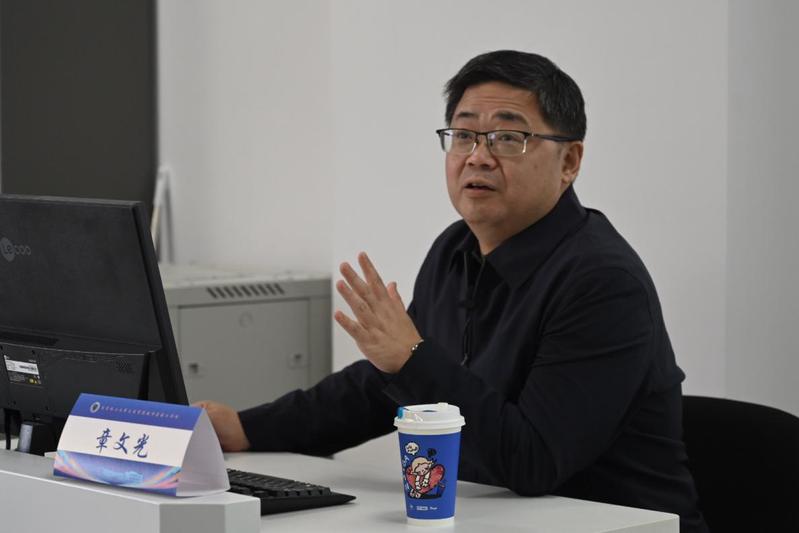
In her opening remarks, Zheng welcomed Professor Zhang and noted that holding the first humanities and social sciences forum of the new semester with a focus on the critical topic of National Social Science Fund (NSSF) applications reflected the College’s strong commitment to supporting high-quality research and provided a strong start for the semester’s scholarly work.
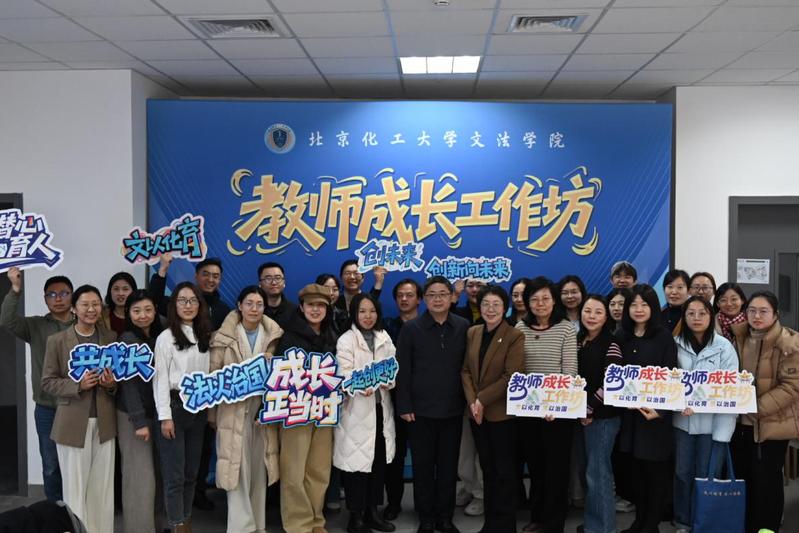
At the beginning of the lecture, Professor Zhang drew on his extensive experience in both applying for and reviewing NSSF projects to systematically outline key aspects of successful applications. He structured his talk around three guiding questions—how proposals are evaluated, what reviewers look for, and how to write effectively—and provided detailed analysis of writing essentials and common pitfalls in essential components, including research rationale, research content, methodology, innovation, expected outcomes, existing research foundation, and references. He emphasized that a high-quality proposal requires not only solid academic grounding but also a clear sense of the research problem, rigorous logic, and distinctive innovative value.
During the experience-sharing session, Professor Zhang summarized five key principles for successful applications: 1) Topic selection should be both strategically aligned with national priorities and grounded in real-world issues; 2) Argumentation should be logically progressive, demonstrating necessity and feasibility; 3) Research methods should be appropriately designed to enhance credibility; 4) Innovation should be substantive rather than rhetorical; 5) Prior research results should closely support the proposed topic.
In the interactive session, participating faculty actively raised questions regarding topic selection, interdisciplinary design, and application strategies for early-career scholars. Professor Zhang offered patient and practical responses and provided specific revision suggestions based on draft proposals shared by several teachers. The lively discussion left participants with clearer application strategies and greater confidence in pursuing high-level research.
The successful workshop provided systematic guidance and practical inspiration for faculty preparing NSSF applications and further stimulated enthusiasm and creativity in research. The College will continue to leverage the Faculty Development Workshop platform to invite distinguished scholars for academic exchange and support faculty in making steady progress and achieving new breakthroughs in their academic pursuits.
